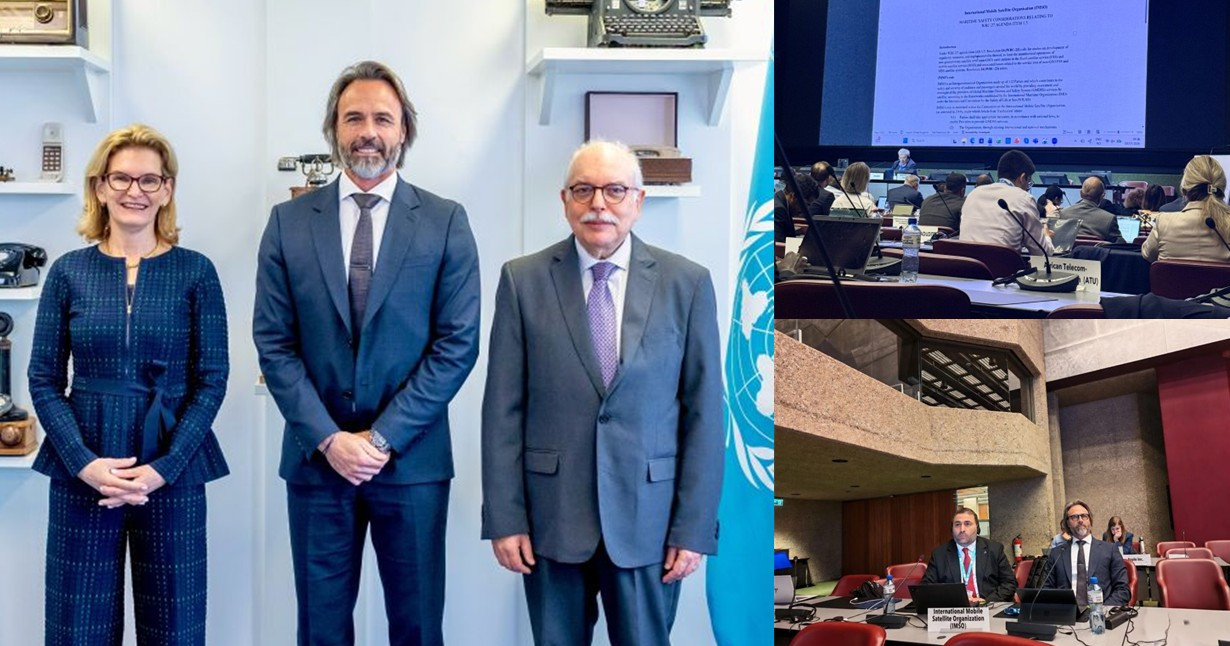
IMSO is currently taking part in the ITU-R Working Party 4A (WP4A) meeting, contributing to the studies underway in preparation for the World Radiocommunication Conference 2027 (WRC27), in particular under Agenda Item 1.5.
Discussions are currently focusing on how to address unauthorized operations of non-geostationary satellite systems (NGSO). While this is an important regulatory issue, it also raises a practical concern: how to ensure that measures introduced do not unintentionally affect safety-of-life services at sea.
This was the core message brought forward by IMSO. As highlighted in its submission, a NGSO system is now an integral part of the Global Maritime Distress and Safety System (GMDSS). Alongside geostationary (GSO) systems, it supports essential functions such as maritime safety information, distress alerting and search and rescue coordination, and must remain continuously available wherever ships operate.
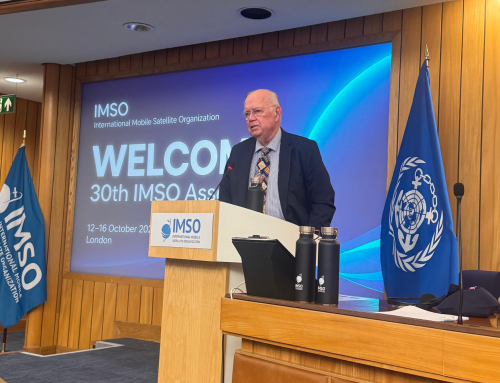
“It is a call to regulators: protect the systems that protect people, and do not let well-intentioned rules put lives at risk,” stated Halil Keskin, Head of Operational Services, during his intervention at the International Telecommunication Union.
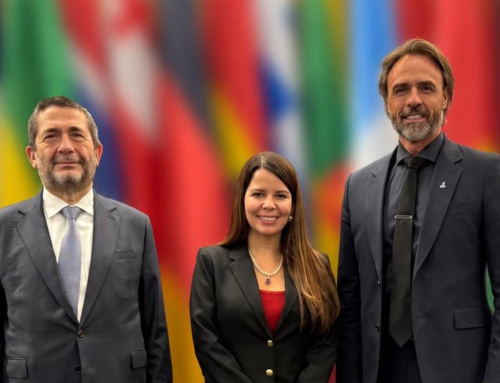
On the margins of the meeting, the IMSO Director General, Laurent Parenté also paid a courtesy visit to Doreen Bogdan-Martin, Secretary-General of the ITU, and to Mario Maniewicz, Director of the ITU Radiocommunication Bureau. These exchanges provided an opportunity to discuss shared priorities, including the resilience of spectrum resources for maritime safety services, the notion of public service role of satellite communication as a parallel to public safety services within the GMDSS, and potential areas for further cooperation.