
17th Tripartite Meeting between EUTELSAT IGO, IMSO and ITSO: Satellite communications and why public service still matters
17th Tripartite Meeting between EUTELSAT IGO, IMSO and ITSO: Satellite communications and why public service still matters
During the 1960s and 1970s, governments established INTELSAT to connect countries worldwide, INMARSAT to improve maritime communications and safety at sea, and EUTELSAT to develop satellite telecommunications in Europe. These were major undertakings, built through international cooperation to provide services that States considered essential.
Commercial companies later took over the operational activities, while the intergovernmental organisations retained responsibility for overseeing specific public service commitments. Today, ITSO (formerly INTELSAT) has 149 Member States, IMSO (formerly INMARSAT) 112 and EUTELSAT IGO 49. Each has a different mandate, but all three oversee obligations intended to protect the interests of the countries and people who rely on these services.
The three organisations signed a Tripartite Memorandum of Understanding in 2009. Drawing on their common history, they meet regularly to discuss their work, the difficulties they face and developments affecting their responsibilities.
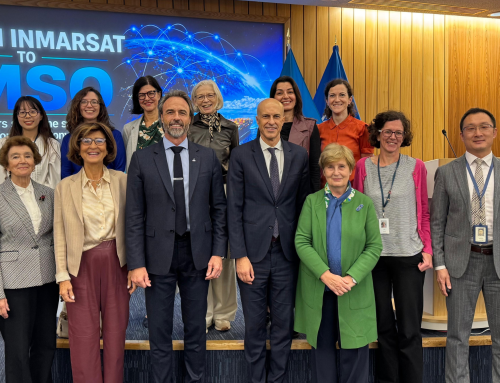
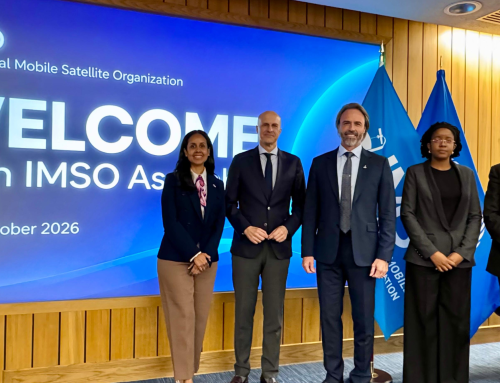
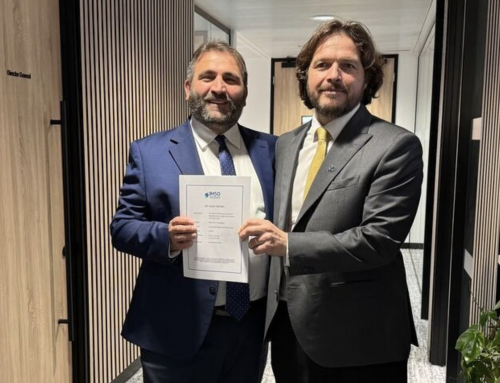
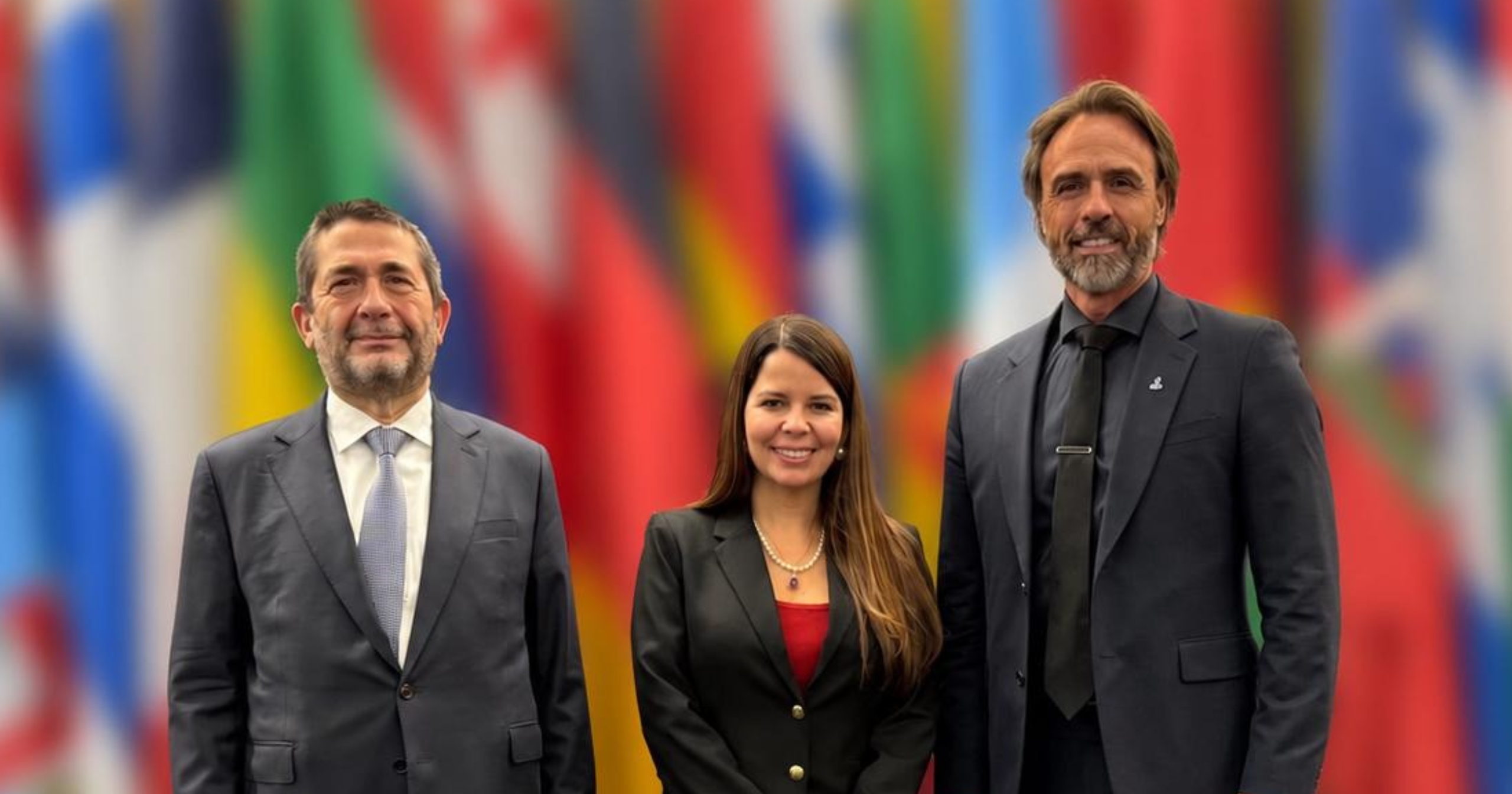
On 21 October 2026, IMSO Director General Laurent Parenté hosted the seventeenth Tripartite Meeting at IMSO’s headquarters in London, welcoming Dr Renata Brazil-David, Director General of ITSO, and Piotr Dmochowski-Lipski, Executive Secretary of EUTELSAT IGO.
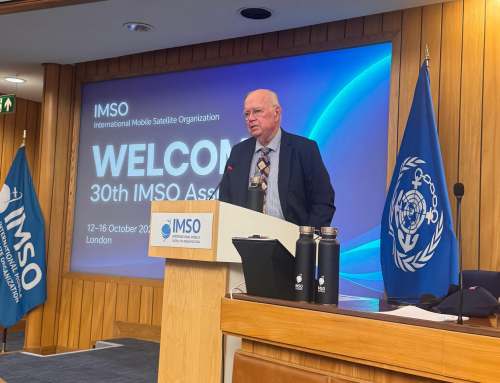
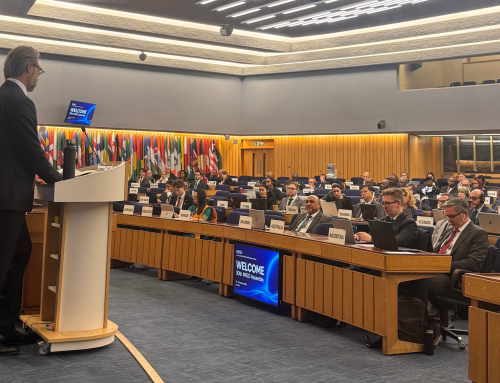
The Heads reviewed recent Assembly discussions and current work. IMSO reported on maritime safety communications and ship tracking, following an Assembly that also marked the fiftieth anniversary of the signing of its founding Convention. ITSO discussed public service obligations following SES’s acquisition of Intelsat. EUTELSAT IGO reported on its oversight of Eutelsat S.A.’s compliance with the Basic Principles of its Convention.
New constellations, a wider choice of services and changes in industry ownership are affecting the work of all three organisations. The meeting provided an opportunity to compare how these developments are being addressed within their different mandates.
The future of the organisations themselves was discussed in detail. The Heads considered how their roles might evolve and what this would mean for the responsibilities entrusted to them by Member States. They also examined the institutional arrangements needed to ensure that public service obligations continue to be met over the long term.
More providers and greater capacity do not, by themselves, guarantee that essential services will remain available and reliable. For the States and people who depend on them, there must also be assurance that the commitments made will continue to be honoured. The Heads reaffirmed the need to preserve those commitments, with clear responsibility for their implementation and oversight. This remains a practical concern as they consider the future role of their organisations.
The next Tripartite Meeting is expected to be hosted by ITSO in 2027.